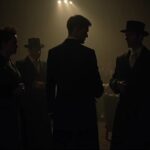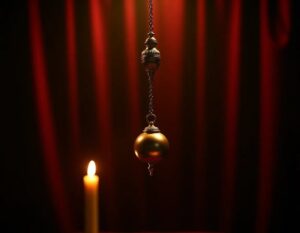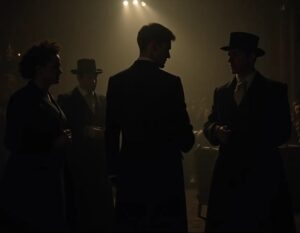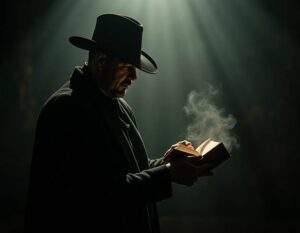

In Part 1: Spirit Slates and Their Shadows: The Forgotten Spiritualist Prop That Still Haunts the Stage, I talked about how people began using the chalk slate in the 1800s. I see many people still use the chalk slate sometimes today. The slate has this name for a reason. But that was not all. The Victorian séance room looked like a stage. The medium came in and did the same thing every time. Most of that system has not been used for over one hundred years. I made this post after I shared the other posts. The spirit trumpet looks like a horn. The end of the spirit trumpet comes to a point like a cone.
The Spirit Trumpet: Voice from the Dark
People use tin or aluminum to make the spirit trumpet. People place the spirit trumpet on the séance table before they switch off the lights. The spirit trumpet works just like the name says. At night, the thing moved. The thing went to the other side of the room. The thing spoke. I see this when people talk in quiet voices. Sometimes people speak loudly from the other side of the circle. The Davenport Brothers used trumpets for tricks in the show. Many people have heard about Etta Wriedt.
Etta Wriedt and other direct-voice mediums used tricks with the trumpet. I heard that Wriedt can match voices in many languages. Wriedt did not know those languages. The investigators did not know what had happened. Most of the time, the method did not work. I liked how the staging looked. The way people make the trumpet tells the story. Most séance trumpets came apart easily. The séance trumpet had two or three parts. The parts fit together.
The medium could put the séance trumpet together or take the séance trumpet apart in a few seconds. The wide end often had a line made with glowing paint. People usually used zinc sulfide for the paint. People saw the trumpet move at night. The glowing band made people look at the place the medium pointed to. People saw the glowing band and walked where the medium showed the way. The medium pointed. People looked at the spot. A lot of people play music, but they do not use the trumpet. Not a lot of people play the trumpet.
A trumpet you can fold and that has a glowing band might look odd to people today. Here are some easy ways to change how the trumpet sounds. Most people do not think a horn can float in the air. That gap gives a chance. The séance cabinet looked like a small stage. People sat together in the Séance Cabinet during séances. The Séance Cabinet was a small closed room made for these meetings. The cabinet made people feel closed in and made the gatherings seem like a show. The room changed how everyone felt during the séance. The Davenport Brothers used the séance cabinet in the 1860s.
The Séance Cabinet: Confinement as Theatrical Architecture
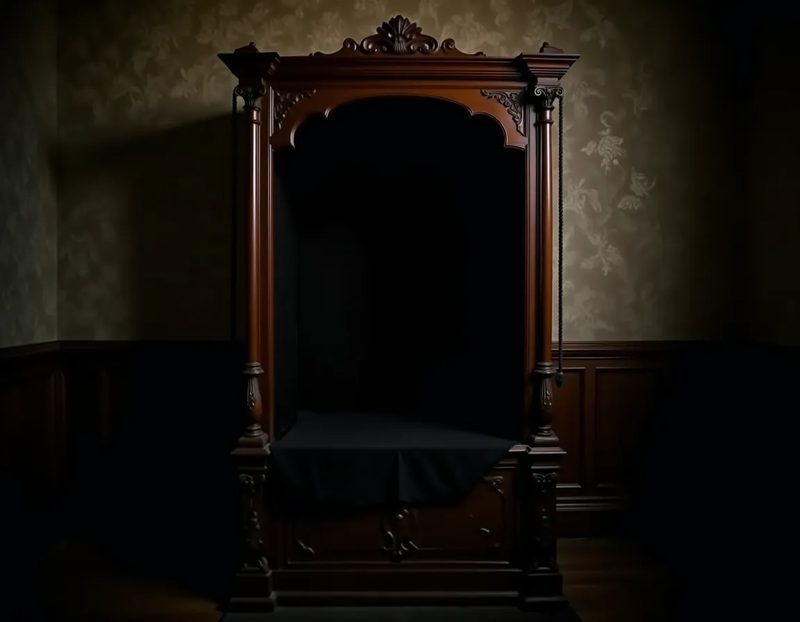
After that, many people began to use the séance cabinet for séances. Setting things up was easy. The medium sat inside a small wooden box. The box had a window. The box had a curtain. The lights turned off. Many people play different types of instruments. I saw hands come out from the opening. When the lights turned on, the ropes were still wrapped around the medium. The Davenport method does not mean much for people who perform today.
The cabinet set this rule for the theater. The cabinet said, I am stuck here. You cannot blame the cabinet. But sometimes, strange things just happen. That building is still there. The building looks strong. The building was still there in 1865. Annemann said that if you use confinement, you can make conviction stronger. When people in the crowd see the performer tied up, they think the next part will be harder. The cabinet got the idea and made the idea real.
Most period cabinets used two or three wood panels. The front had a curtain. Inside, the sitting space was small. There is nothing special here. Secondary Controls: The Mechanics of the Witnessed Release
The story started when something happened outside the cabinet. The cabinet stayed silent. It helps when you remember to hold back. Secondary Controls: The release control changed how the séance went. I saw someone look at the release control. The release control had a big role in the séance.
Secondary Controls: The Mechanics of the Witnessed Release
The sitters held the medium’s hands in the dark. They used their hands to tie the wrists together. They sat close to the feet of the medium. A Victorian séance felt like people came and went. The sitter watched for signs or answers. The sitter waited. The medium tried to move with ease. I saw that I had to use the other controls. A secondary control takes place when the sitter thinks the sitter is holding the medium. The sitter holds something else.
This hand might belong to someone else. The medium can move the arm to the other side. The medium can bring the arm back again. Sometimes the arm is not real. Sometimes a device picks things up like a hand, but the device does not use the person’s real hand. Hereward Carrington talked about these things in “The Physical Phenomena of Spiritualism” in 1907. Carrington tried to show the tricks. Many performers used the book for help. He knew some good ways to trade things. When the sun goes down, I use my hands to touch what is close to me.
Some people can trick touch with ease. A medium can keep the sitter’s hands on the table. The medium can lift one hand for a short time, and the sitter might not notice it. The odd performer knows how to use the other controls. The strange performer can use the whole system. The strange performer can do things in the dark. This is not rope escape. This seems personal to me. Someone in the crowd thinks the medium holds the person by the hand. The person looks up and sees the medium on the other side of the room, away from everyone else.
The medium holds some bright things. Some things only show halfway. These things rarely happen in a stage escape act. The sitter saw the effect and agreed with it. This is why people see the impossible thing. You can help small things stand out, or you can lift someone’s spirit. This does not need much work. It takes longer to make the whole spirit feel real. You need to get ready and make a plan to do it right. Any medium can show up after you set things up.
Luminous Accessories and Partial Materialization
I notice someone has a hand raised. Sometimes I see a face behind the gauze. You might spot two glowing eyes in the dark. The props did not stand out to me. If you put zinc sulfide on muslin or on thin gauze, the fabric gives off a soft light. If you use a hidden rod to hold the fabric or put the fabric over your hand, the fabric can look like it is floating. Some people took some wire. They bent the wire. The wire looked like hands. People put glow paint on the wire hands.
People reached out their hands to other people. The others sat down. Each person took a foldable stick and held the stick. Some people took rubber gloves. Some people put some glowing stuff on the rubber gloves. They filled the rubber gloves with air. The gloves puffed up. The gloves looked like hands. I put my hands on the thin cloth by the cabinet door. Katharine Bates wrote about a séance from the 1880s.
People at the séance said they saw a spirit hand. People touched the hand. People felt how warm the hand was. The spirit took the paper and wrote some messages. The spirit hand would pick up the gifts people brought to the séance. When the séance was over, the hand was not there anymore. Two out of the three things are rubber gloves. The rubber gloves have warm water inside. You can write this part yourself. Most people who perform today have never tried glowing accessories.
A glowing hand can do more than just make people laugh. When someone makes a glowing hand with care and uses the glowing hand in the right story, the glowing hand can have a bigger impact. When there is no light and the sitters stay quiet, everything feels strange. Choose the best music for the story. The feeling stays even when the lights are on. The billet work in the séance room feels like the main test in the meeting. The message that was intercepted stands out during the billet work. Someone stopped the message at this time. Someone writes a question on a sheet of paper. Then the person seals the paper.
Billet Work and the Intercepted Message
The medium takes the sealed paper and reads the question out loud. The medium keeps the paper closed. Sometimes it feels like it burns. Many Victorian mediums used billet reading. The technology started out as something simple. After some time, the technology improved. You can hold the billet in your hand when you pick up the billet. Someone can check the billet before the lights go out. Someone can take out the billet and put in a blank billet. One person sits at the top and makes the thumbnails.
Someone helps people in the waiting room. Someone else can look behind the stage before the greeting starts. Annemann wrote Practical Mental Magic in 1944. Corinda put out “Thirteen Steps to Mentalism” after that. Corinda took the ideas and made the ideas better. The strange performer cares about the past. When you pick up a billet during a séance and say the message is from someone who has died, you are using something created for the séance. It fits, but it does not work well for a modern mentalism show. I think a modern mentalism show needs something else. The sitter wrote the name of the sitter’s dead mother.
You know this already. When you watch things happen at a séance, the feeling is different from the way you learn things during mentalism at a business event. The meaning changes based on the situation. When people have a séance, a billet reading can seem personal and a bit strange. Some Victorian mediums used to start with a prayer. Someone said the prayer. An assistant got some sealed slips and placed the slips in a basket. The assistant picked up the basket and took the basket to a nearby room. The medium asked questions. The knocks gave answers in a code.
After that, the medium went back inside. Basic. It works fine. The sitters made up their minds before the medium started to talk. People used the Ouija board before 1966. Parker Brothers began selling the Ouija board in 1966. The Ouija board by Parker Brothers came in a box. People in America began to use talking boards for spiritual reasons in the 1880s. People once used planchettes to try to speak with spirits. Most people do not think the talking board is scary.
Most people do not see the talking board as a toy. People in the Victorian era used a tool to talk to spirits. People saw the talking board in plays before Parker Brothers made the talking board. Some people take the tool to parties. Some people buy the tool because it is fun. A long time ago, people wrote by hand on pieces of wood. People used thick boards when people made the first writing boards. Most planchettes were made from wood. A small glass ball or lens sat in the middle. The glass helped the planchette move across the table easily.
The Talking Board Before Parker Brothers Got Involved
Two people place their fingers on the planchette. The thing moved. I saw it point at the letters. The system kept the messages. Most times, the ideomotor effect moves the planchette. Small muscle movements, shaped by what people think will happen and by what others in the group do, make the pointer move even if people do not want to move the pointer. This is real physiology, not magic. After some time, the performer sees the change. What matters is that when many people sit in the same room, they work together to share a message. These people did not plan for this message.
I do not think this is what I wrote. That can help the scene stand out. A hand-made talking board that someone used in a real séance feels different from a Hasbro board. The materials matter. The wood feels heavy in my hands. Someone wrote the letters by hand. The planchette has some brass parts. These things make people see it in a new way. If you want to set up a séance show, the tool you pick matters just as much as how you use the tool. Someone got the Victorian Arsenal ready for a show today.
I saw people moving things and checking that everything was set. The place felt busy and everyone looked full of life. The instruments listed above are not kept in the museum. These methods use props. If you use any of these in a magic show or a mind-reading show, the audience will notice something else. This new feeling can help people when people have already seen most things. These are some notes about integration. First, share the background. Put the Victorian arsenal on the stage for the show. After that, bring in the props.
The trumpet needs a frame. The board needs a frame around it. The cabinet needs a frame to stay sturdy. If you put them in a modern mentalism show, they look like tricks. If you add a séance scene to the story, even if it is simple, the history of séances gives it more meaning. The séance scene can help the story move forward. The room shows how people lived in the past. A tin trumpet with tape over a crack sounds different from an old trumpet that still works. People notice the quality of the material, even when people do not know the reason. The look of something can change how a room feels.
Staging the Victorian Arsenal in a Modern Performance
If something looks real, the room feels one way. If it does not look real, the room feels another way. When something changes about the object, how it looks can change how people feel in the room. Sometimes something that looks real can make the room feel different. When the object moves or changes, the feeling in the room can change too. People can use darkness as a tool. The darkness covers everything. Darkness changes many things as well. Many Victorian mediums worked in the dark. Let us put the context before the props.
The trumpet needs a frame. The board needs a frame. The cabinet needs a frame. If I use these in a modern mentalism show, these look like tricks. So I do not want to use these. When you set up a séance, even a simple séance, the history behind séances gives it meaning and helps tell the story. The meaning of the séance comes from the history of séances. The story of the séance feels richer because of the past. The time in the room is right. A tin trumpet that has tape over a crack is not the same as a good period instrument.
- Context before props. The trumpet, the board, the cabinet: these objects need a frame. Drop them into a contemporary mentalism show and they look like gimmicks. Build a séance context, even a stripped-down one, and they carry historical weight that does the dramatic work for you.
- Period accuracy reads in the room. A tin trumpet with tape over a crack is not the same as a properly constructed period instrument. Audiences respond to material quality even when they cannot articulate why. The apparent authenticity of the object changes the room’s receptivity to what happens with it.
- Darkness is an instrument, not just cover. Victorian mediums worked in darkness because darkness is a psychological condition. Sitters lose spatial reference, hearing sharpens, touch becomes unreliable. This works whether your audience is sitting in 1882 or 2025.
- One prop at a time. The temptation is to stage a full Victorian séance with everything available. Resist it. One well-executed trumpet effect in a minimal performance is more powerful than a prop-heavy spectacle. Weight comes from detail, not volume.
People can tell when something is good, even if people do not know the reason. If the object looks real, the room reacts more. If the object does not look real, the room reacts less. The way the object looks changes how the room reacts. People can use darkness as a tool. Darkness does more than just hide things. Victorian mediums held sessions in the dark. The dark can make people feel and think in different ways. When people get lost, people listen more. The sense of touch does not feel as sharp.
This will work for the audience in 1882 or in 2025. Take one prop each time. I want to set up a real Victorian séance with all the usual things. Do not let it win. A single trumpet sound in a simple show can get more notice than a show with many props. Weight comes from the detail, not from how much detail there is. The darkness made people feel something deep inside them. The darkness touched something real in every person. Sometimes the sitters do not know where the other sitters are. I hear better now. The sense of touch gets weaker. This works for people in 1882 and for people in 2025. Pick up the prop. Put the prop down. Pick up the next prop. Hold only one prop at a time. You can hold a Victorian séance and use anything you find. Try your best and keep moving forward. A loud trumpet draws more attention in a small show. When there are many props in the show, people notice the trumpet less. The detail helps it stand out more. Just because you own many things, it does not mean the things are heavier. People who understood attention, belief, and the mind set up the Victorian séance room with skill. People kept the knowledge after the spiritualist movement ended. Some people learned what they could and showed others. The knowledge stayed when the movement was done. Anyone who wants to do the work the right way can use it. If you want instruments from a certain time, if you want to set up a séance show, or if you need props with real history, you can go to the Arcane Relics shop. Everything at the place works well for people who care about doing a good job. The place does not like people who want something different.