
The show doesn’t begin when you ask for silence. For a working mentalist, the show begins when the first guest arrives, or in some cases when the person who greets you at a venue mentions that the guest of honor has a mother who passed away recently. That piece of information correctly filed away becomes the key upon which the entire evening will hang. Pre-show isn’t preparation.
The Pre-Show Window Is Finite and Unforgiving
Pre-show is the opening act to a performance you probably won’t even realize is happening. The Pre-Show Window Is Finite and Unforgiving There is a pre-show window that opens as soon as guests begin to arrive for your performance and closes as soon as you take your stage. Experienced performers know this window is rarely open for longer than 20 minutes in close-up, 30 minutes in stage settings. Every minute that you’re socializing rather than working during this window is a minute of information you’ll never get back.
While most mentalists struggle to keep the performance concept in mind at all during this time, failing to transition seamlessly from a preparatory state to performance mode, they often fall into one of the common pitfalls of this time frame: setting up props, mentally rehearsing routines, and standing by waiting for the act to begin. In the mean time, the guests are socializing. They’re introducing each other and explaining their relationship to each other. They’re mentioning names, dates, and preferences.
The entire time they’re completely unaware that there is a working mentalist in their midst listening for important information. Working the Pre-Show Window Effectively Strategic conversation during this time isn’t small talk. In fact finding isn’t casual. It isn’t natural.
Engineering Useful Conversations
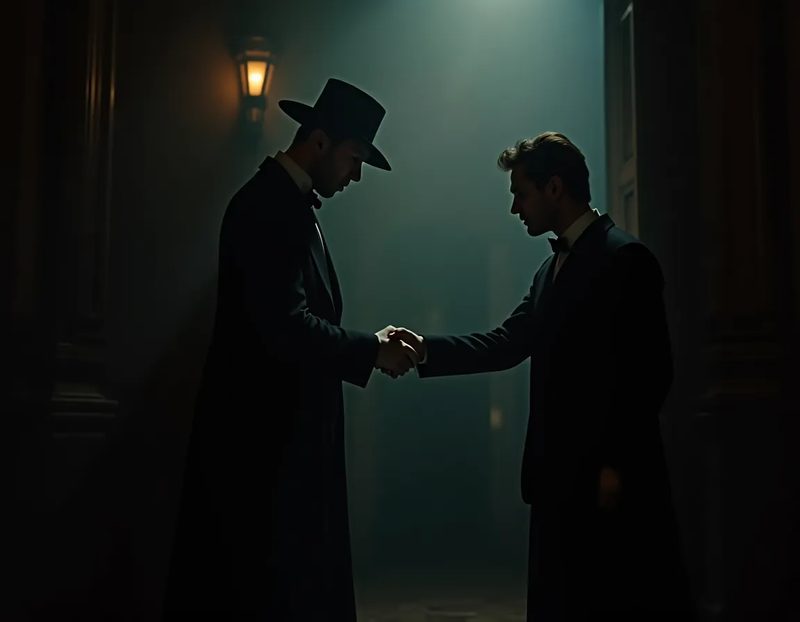
It takes work and an understanding of the psychology of what’s happening and what’s necessary in order to elicit the information that you’ll need during the act. There are three principles you should keep in mind when trying to collect information during this period: Ask open-ended questions that yield proper nouns “What brings you here tonight?” doesn’t yield as much useful information as “How do you know the host?” Proper nouns give the mentalist context that they can later use in the performance and they serve to anchor specific details to time and place. The first sentence of a reply will always include the wording that you asked for, but it’s the second sentence of the reply that yields the most useful information. Ask for additional information after they’ve told you what they think you want to hear: “She mentioned her friend David” and “She mentioned a friend” are not quite the same to a working mentalist.
Ask for additional information after they’ve told you what they think you want to hear and you’ll find that they’re happy to share as much information as you’ll allow them to. Be receptive to topics that they bring up. The most useful information will always arise organically and will be related to topics that they want to discuss. Be receptive and you’ll get more than you would if you were to steer the conversation in a specific direction.
- Ask open questions that return proper nouns. “What brings you here tonight?” nets you little. “How do you know the host?” gives you a name, a context, and a relationship to map. Proper nouns anchor specificity in a show. “She mentioned her friend David” lands differently than “she mentioned a friend.”
- Listen for the second sentence. The first sentence is usually managed. The second sentence is where people tell you what they actually think. Give people room to keep talking after their initial answer and you will collect something useful roughly sixty percent of the time.
- Let the topic land on you, not the other way around. The best pre-show intelligence comes from subjects the guest raises voluntarily. A comment about a long drive from the coast gives you geography. A mention of a recent health scare gives you something more. You do not steer toward these things. You create the conditions for them to surface.
Working the Room Before Anybody Takes a Seat A working mentalist has complete control of the venue before an audience member ever sits down or even takes notice of their presence. Having control of the environment before a performance is the key to seamlessly integrating it into the show itself. All of the information contained in this section is in addition to your natural working knowledge of a venue and everything you’ve learned up to this point about a performance. Some of the information contained here will be entirely new to you while other parts will be reinforced from your experience with magic and mentalism.
Reading the Room Before Anyone Sits Down
It is all important. Begin by learning the space without any people in it. Pay particular attention to the entry and exit points and the path that guests will follow as they move into the performance area. Take a look at the bar and try to get an idea of who will be standing there during the performance, and where they’ll be relative to the other audience members.
As guests begin to arrive, pay particular attention to their clusters and movement patterns. Remember that extroverted guests will tend to seek out and take up space nearest to entrances and exits. Guests who are shy or wish to avoid social interaction during the performance will hug the walls and seek to put as much distance between themselves and the rest of the audience as possible. Couples will often sit apart during the performance if they’re not speaking to one another.
These patterns should be studied and taken into consideration when crafting your act. A bizarre magic performer should also be aware of the ambient props in a space that will be available to them to set up and use during the act. Having a sealed envelope sitting on a table and a covered object on a pedestal before an audience takes notice of them is very different from doing so after the audience has taken their seats and is focused upon the performance. Having an open book face down on a chair before an audience takes notice of it is very different from doing so after the audience has taken their seats and is focused upon the performance.
Engineering Useful Conversations During this time, there is no distinction between socializing and performing. Strategic conversation is not about being friendly to an audience and working them for information during the pre-show period. It is about about using the format of social conversations to collect the information you’ll need to perform during the main portion of your act. A working mentalist will have to be able to craft conversations that feel like social gatherings to the other participants, yet yield a high degree of useful information about the guests and relationships between the guests.
Scribe: Building a Pre-Show System That Holds
As such, pre-show conversation engineering is quite different from both magic and mentalism in a traditional sense and also quite different from most people’s everyday social interactions. Scribe: Building a Pre-Show System That Holds A working mentalist can collect a tremendous amount of information from their guests. The problem isn’t collecting it. It’s organizing it so that they can access it properly when it’s needed during the performance.
A good system for pre-show intelligence is like a scribe that serves the mentalist by allowing them to quickly and easily access the information that they’ve collected, while hiding the process from the audience’s view. Mental notes aren’t reliable and they tend to break down long before the pressure of the stage performance begins to mount. A detail that seemed very important as it was collected will begin to fade by the time you’re three effects into the main portion of the act. You’ll start to notice the faces of the people in the third row staring up at you as the mental notes you’ve collected up to this point begin to fall apart under the pressure of the stage.
Scribe serves to help fill this gap between collecting the information and having it available for you to use during the main portion of the act. It’s a tool that has been designed from the ground up to serve the needs of the working mentalist. It’s something that you can naturally use during your pre-show conversations with the guests, without drawing any suspicion to yourself, yet it serves to organize all of the important details that you’ve collected in a way that’s useful to you during your performance. The practical benefits of using Scribe as a tool to organize your pre-show intelligence are easy to see.
It enables you to cruise through a room of guests, collecting whatever information you can find along the way, while at the same time using that information to create a structured performance that will allow you to create the illusions and impressions that you’re looking to create. You can use it to build a basic intelligence picture prior to the arrival of your guests, so that you have a good idea of what they’ll be like before they start to arrive. You can then use this information to help build your set list and guide your decisions regarding the main portion of your act. Collecting Intelligence and Depoying It Without Warning There’s an art to using the information you’ve collected during the pre-show period, and presenting it to the right people at the right time in such a way that it always feels right and never like magic or trickery.
The timing of when you deploy the information you’ve collected will be critical. There’s an art to presenting the information in such a way that it never feels like you’re using it. When you present correct information at the wrong time, it always comes across as luck. Present it at the right time, and in the right context, and it will always feel like more than luck.
Deploying Intelligence Without Telegraphing the Work
Again, it’s a matter of presenting it in such a way that it feels right rather than like it’s part of a trick. The timing of when you use the information you’ve collected is important but it’s not the only thing. It’s also important that you follow a few guidelines for presenting this information so that it’s always felt organically and never as part of the performance itself. The principles to keep in mind are as follows: Never lead with specific information; Build up to it; Make the audience feel the performance of the magic as you lead them to the punch line so that they have time to fully buy into it before it’s revealed.
By presenting your information in a broad way that leads up to a specific punch line you’ll create a completely different impression than if you were to just state the information outright. Use the information to ask questions; Rather than to state information; The punch line to a question will always feel different than a statement would. Not all of the information you’ve collected during the pre-show period will necessarily be used during your performance. In fact, it’s always better to have more information than you’ll be able to use, because having more than you need adds to the impression that you could have done more if you had chosen to.
The pre-show period isn’t preparation for a performance. It’s the performance itself. The performance of magic isn’t something that you do on stage in front of the audience. It’s something you do every minute of every performance.
- Never lead with the specific. Build toward it. Let the audience feel the approach before the arrival. A broad statement narrowing toward a precise detail creates a different psychological experience than going straight for the name.
- Use the information to ask a question, not make a statement. “Is the person you’re thinking of someone who recently moved?” lands with more apparent impossibility than “You’re thinking of someone who recently moved.” The question format requires the subject to confirm, which creates a visible moment of astonishment rather than a statement they simply receive.
- Let some of it go unused. Not every piece of pre-show intelligence needs to be spent. If you have six strong details and you use three, the audience assumes you could have gone further and chose not to. Restraint implies depth.
Pre-Show as a Performance Philosophy
If you can keep this in mind and remember that every minute is part of your performance, then you’ll be able to create the most amazing and memorable effects possible for your audience. A mentalist who creates truly amazing performances for his audiences doesn’t think of the time before the act in terms of preparation or even in terms of working for the act. It’s more than that. The time before the act is part of the act itself.
The time before the act is the performance. The entire time before an audience takes their seats for a performance is, in effect, a continuous performance of its own. The curtain never rises because the curtain never falls. The act never begins and ends because the act never ends or begins.
If you can remember this fact and learn to see everything that you’re doing as part of this performance, you’ll be able to create an experience that’s far more mysterious and compelling than anything else that you’ve ever done before. The preparation for a stage performance is never preparation for the stage performance itself. The preparation for a stage performance is always part of the stage performance. Working a room before an audience arrives is part of the performance of magic and mystery that you do for the guests before they take their seats.
Working a bar before the audience arrives is part of the performance of magic and mystery that you do for the guests before they take their seats. In fact, the preparation for a stage performance is merely a subset of this larger act of magic and mystery that working mentalists perform for an audience on a daily basis. You’re not preparing for an act when you’re working a room or the bar prior to a performance of magic. You’re already performing.
In fact, you’re already performing at its most intimate and essential level, because the performances you give the guests while preparing for the stage show is the most important aspect of any stage show, because it provides the time spent preparing for the stage performance is always the audience’s most intimate experience with the performer during the entire performance. It’s also one of the few periods during which the audience feels free to express themselves and behave in ways that they might not feel free to do when they’re sitting in the seats and fully focused upon the stage performance. If you can perform during this time in a way that adds to the overall magic and mystery of your stage performance, you’ll create an experience for your audience members that will be far more memorable and unique than anything else that you could do. Corinda touched on this idea in The Thirteen Steps To Mentalism but to fully grasp the concept it’s up to you to apply it. The pre-show period is treated far too often as if it were a sub-set of technique, a grab-bag of things to use in an emergency. If you treat pre-show intelligence as a philosophy of performance that underpins everything you do in a show rather than as an afterthought, you’ll find that you’re able to perform at an entirely different level. The pre-show period is the period of time that begins when the guests for your show start to arrive and continue on until you take your stage. This period of time has nothing in common with what most people consider to be a performance of magic. Browse the Arcane Relics shop for tools built for performers who work at this level, including Scribe and the full range of mentalism and bizarre magic resources.